The definition of AI in business is shifting. We're moving past reactive chatbots that just answer questions, into the era of proactive AI agents. If your business isn't building multi-agent systems in 2026, you're already falling behind.
Remember when having a website was optional? When mobile apps were "nice to have"? That's where we are with agentic AI today. In 12 months, businesses without autonomous agent ecosystems will be competing with horses in the age of automobiles.
What Is a Multi-Agent Ecosystem?
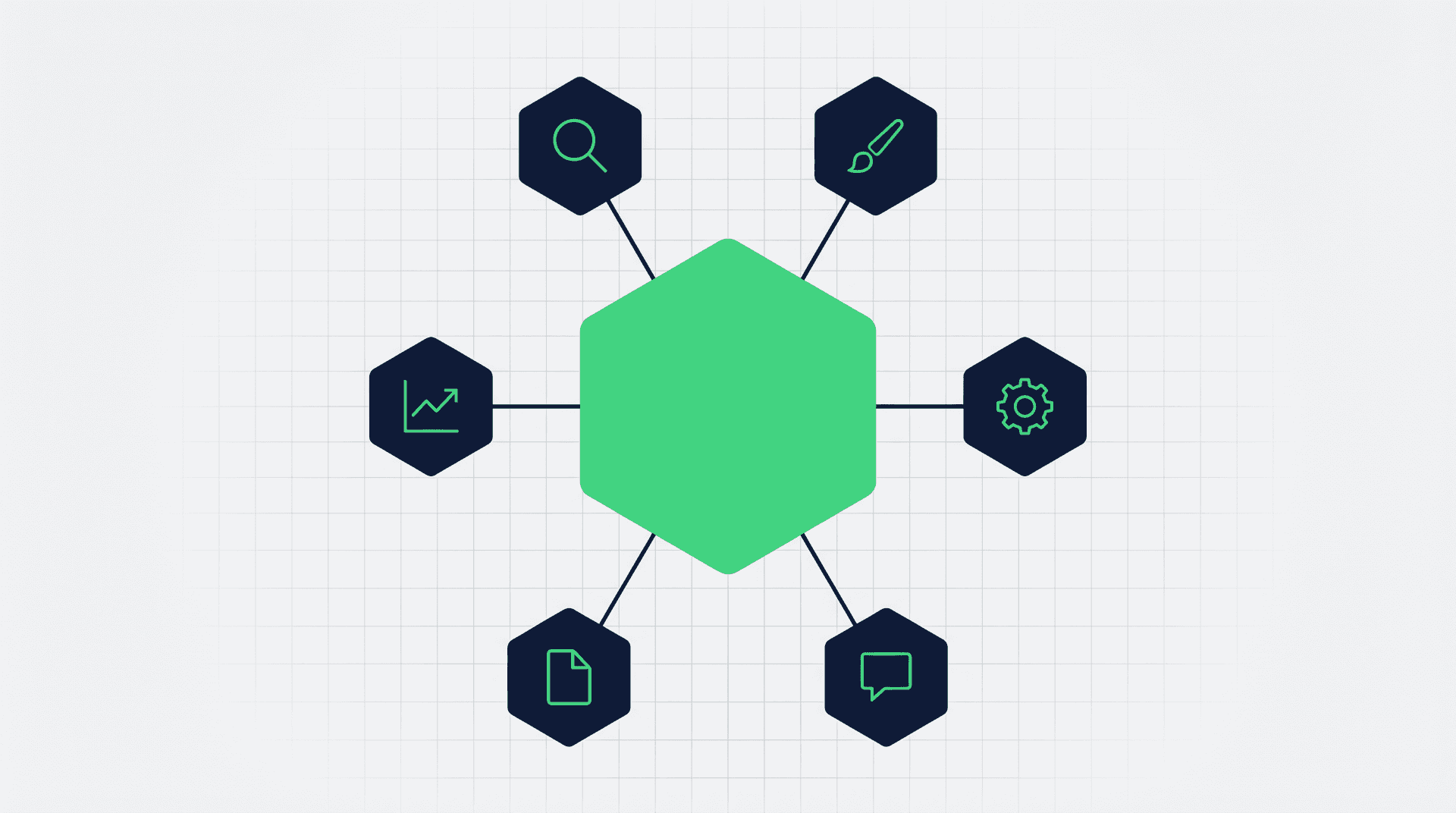
A multi-agent ecosystem is a network of specialized AI agents that communicate and collaborate to complete complex tasks. Think of it as your digital workforce: each agent has specific expertise and responsibilities, and they work together seamlessly without human intervention.
Research Agent
Gathers market intelligence, competitor data, and customer insights from multiple sources in real-time.
Analysis Agent
Processes the research data, identifies patterns, and generates actionable insights specific to your business context.
Execution Agent
Takes the insights and automatically implements strategies: updating campaigns, adjusting pricing, or creating content.
Unlike traditional chatbots that wait for prompts, these agents proactively identify opportunities, solve problems, and execute solutions 24/7.
The Death of Manual Workflows
Traditional automation tools like Zapier revolutionized business by connecting apps with "if/then" rules. But they're about to become obsolete. Why? Because they're rigid, rule-based, and can't adapt to context.
| Traditional Automation | Multi-Agent Systems |
|---|---|
| Follows rigid if/then rules | Uses reasoning and context to make decisions |
| Breaks when edge cases occur | Adapts to new situations dynamically |
| Requires manual updates for changes | Self-improves based on outcomes |
| Handles single tasks in isolation | Orchestrates complex workflows end-to-end |
Multi-agent systems don't just automate tasks; they understand objectives and figure out how to achieve them. When a customer's needs change, when market conditions shift, when new opportunities arise, your agents adapt without waiting for you to reprogram them.
Real-World Example: The Autonomous Sales Process
Let's walk through how a multi-agent ecosystem transforms a typical B2B sales process:
Traditional Process (2-3 days, 4 human touchpoints)
Lead comes in → Sales rep qualifies → Research team builds profile → Designer creates deck → Sales presents
Multi-Agent Process (20 minutes, 0 human touchpoints)
Sales Agent
Instantly qualifies the lead through natural conversation, extracting budget, timeline, and specific pain points.
Research Agent
Analyzes the company's tech stack, recent news, competitor landscape, and builds a comprehensive profile.
Design Agent
Generates a custom pitch deck with company-specific case studies, ROI projections, and implementation timeline.
Scheduling Agent
Books the meeting, sends the custom deck, and briefs the human sales rep with key talking points.
The result? Your prospect receives a hyper-personalized experience in minutes, not days. Your sales team walks into meetings fully prepared. Your conversion rates double because every interaction is optimized.
The Orchestration Challenge
Building individual AI agents is straightforward. Building a coordinated ecosystem that doesn't hallucinate, conflict, or spiral out of control? That's the challenge.
Architecture Design
Defining clear agent responsibilities, communication protocols, and decision hierarchies.
Data Governance
Ensuring agents access the right data at the right time while maintaining security and compliance.
Quality Control
Implementing oversight mechanisms to catch errors before they impact customers.
Continuous Learning
Building feedback loops so agents improve from every interaction.
This is where most businesses fail. They try to bolt AI onto existing processes instead of reimagining workflows from first principles. They build agents in silos instead of designing integrated ecosystems. They focus on the technology instead of the business outcomes.
Grid Theory specializes in architecting these multi-agent ecosystems. We don't just build AI; we design digital workforces that transform how businesses operate.
The Autonomous Future Is Already Here
While your competitors are still debating whether to add a chatbot to their website, forward-thinking businesses are already operating with autonomous ecosystems:
- E-commerce platforms where AI agents manage inventory, pricing, and customer service without human intervention
- Professional services firms where agent teams handle research, analysis, and report generation
- Healthcare systems where agents coordinate patient care, scheduling, and insurance verification
- Financial services using agent ecosystems for real-time risk assessment and portfolio management
The businesses that win will be the ones operating autonomous ecosystems, while competitors are still manually triggering single-task AI tools. The gap between AI-native businesses and traditional operators will become insurmountable.
The question isn't whether you need a multi-agent ecosystem. The question is whether you'll build one before your competitors do.
Ready to Build Your Multi-Agent Ecosystem?
Stop playing catch-up with single-purpose AI tools. Let Grid Theory architect a complete autonomous ecosystem for your business.