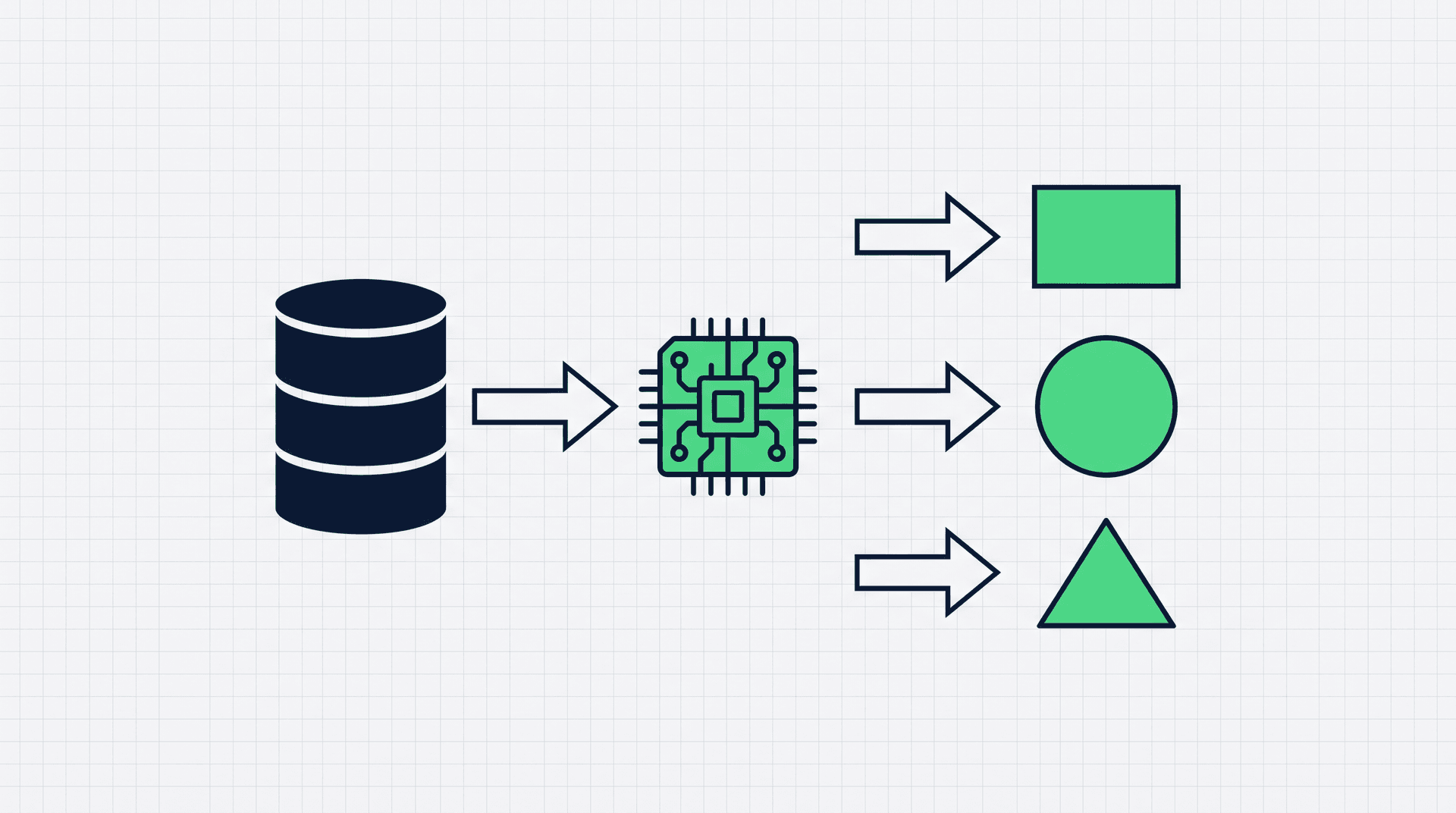
A PDF brand guideline document is useless to an AI agent. If you want AI to generate on-brand assets, you need a machine-readable system.
Your marketing team spends weeks crafting a 50-page brand guideline PDF. It sits on your company drive, referenced maybe once a month when someone needs to check the exact hex code for your primary color. Meanwhile, your AI tools are churning out content that looks like it came from a completely different company.
The disconnect? AI can't read your PDF. It needs something fundamentally different.
The Problem with Generic AI Outputs
When you ask ChatGPT or Claude to create marketing materials, you get generic outputs that could belong to any company. The AI has no context about your brand's unique visual language, component patterns, or voice guidelines.
- Lack of Visual Context: AI doesn't know your color palette, typography rules, spacing systems, or component library. Every output starts from scratch.
- Missing Design Constraints: Without strict rules about button styles, card layouts, or heading hierarchies, AI defaults to generic patterns that dilute your brand.
- Inconsistent Voice: Each prompt produces a different tone because the AI has no persistent memory of your brand personality and communication style.
Engineering a Machine-Readable System
The solution isn't better prompts. It's building a brand system that AI can actually parse, store, and reference. Here's how to structure your brand assets for machine comprehension:
1Color Systems as Code
Instead of listing colors in a PDF, define them as structured data:
{ "colors": { "primary": { "base": "#54CE8D", "hover": "#4AB87C", "light": "#E8F9F1", "contrast": "#FFFFFF" }, "text": { "heading": "#080810", "body": "#647B91", "muted": "#A1B5C9" }, "backgrounds": { "primary": "#FFFFFF", "secondary": "#F9FAFB", "dark": "#080810" } } }2Typography as Hierarchical Rules
Don't just name fonts. Define the complete typographic system:
{ "typography": { "fontFamily": "'Inter', system-ui, -apple-system, sans-serif", "scale": { "h1": { "size": "3rem", "weight": "700", "lineHeight": "1.2" }, "h2": { "size": "2rem", "weight": "700", "lineHeight": "1.3" }, "h3": { "size": "1.25rem", "weight": "600", "lineHeight": "1.4" }, "body": { "size": "1.125rem", "weight": "400", "lineHeight": "1.7" } } } }3Component Libraries as Templates
Define reusable patterns that AI can assemble:
{ "components": { "button": { "primary": { "background": "$colors.primary.base", "color": "$colors.primary.contrast", "padding": "0.875rem 2rem", "borderRadius": "0.5rem", "fontWeight": "600", "hover": { "background": "$colors.primary.hover" } } }, "card": { "background": "$colors.backgrounds.primary", "border": "1px solid #E5E7EB", "borderRadius": "0.75rem", "padding": "2rem", "shadow": "0 1px 3px rgba(0,0,0,0.1)" } } }4Voice and Tone as Parameters
Transform subjective voice guidelines into measurable parameters:
{ "voice": { "formality": 0.3, // 0 = casual, 1 = formal "technicality": 0.7, // 0 = simple, 1 = technical "enthusiasm": 0.6, // 0 = reserved, 1 = energetic "principles": [ "Use active voice", "Lead with benefits, not features", "One idea per sentence", "Avoid jargon unless explaining it" ], "forbidden": ["utilize", "leverage", "synergy", "best-in-class"] } }The Onboarding Process
Modern AI design tools like Claude Design don't just accept these parameters passively. They actively scan your existing assets to build a comprehensive understanding of your brand.
How AI Learns Your Brand
When you connect an AI design system to your codebase, it performs several automated analyses:
- Parses CSS files to extract color values, typography rules, and spacing systems
- Analyzes component files to understand UI patterns and composition rules
- Reviews existing content to learn voice, tone, and messaging patterns
- Maps relationships between design tokens and their usage contexts
This creates a persistent "brand memory" that the AI references for every future generation. Instead of starting from zero each time, it builds on your established system.
Scaling Brand Consistency
Once your brand system is machine-readable, the benefits compound across your entire organization:
| Traditional Process | AI-Powered System |
|---|---|
| Sales creates off-brand pitch decks | Every deck follows brand guidelines automatically |
| Marketing waits days for design approvals | Generate on-brand assets in seconds |
| Product teams interpret guidelines differently | Consistent UI components across all products |
| Support writes in varied tones | Unified voice across all customer touchpoints |
- Democratized Design: Any team member can generate professional, on-brand materials without design skills or brand expertise.
- Real-Time Adaptation: Update your brand system once, and every AI-generated asset instantly reflects the changes.
- Compound Efficiency: What used to take hours of back-and-forth with designers now happens in seconds, across every team.
Building Your Machine-Readable Brand System
Here's a practical roadmap to transform your static guidelines into an AI-ready system:
1Audit Your Current Assets
Catalog all brand elements: colors, fonts, logos, components, voice guidelines, and usage examples.
2Structure as Data
Convert visual and written guidelines into JSON, YAML, or similar structured formats that machines can parse.
3Create Token Relationships
Map how different elements work together: which colors pair with which backgrounds, how spacing scales across breakpoints.
4Build Component Templates
Define reusable patterns for common elements: buttons, cards, sections, layouts.
5Test with AI Tools
Feed your system to AI platforms and refine based on output quality.
The Future of Brand Management
Your brand identity must evolve from a static document into a dynamic, programmable database. This is about more than efficiency. It's about staying competitive as AI takes on more of the work.
Companies clinging to PDF brand guides will watch competitors produce far more content, all perfectly on-brand, while they're still waiting for design approvals. The question isn't whether to make this transition, but how quickly you can implement it.
Key takeaways
- Traditional brand guidelines are invisible to AI systems
- Machine-readable brand systems enable consistent AI-generated content
- Structured data replaces subjective interpretation
- Every employee becomes capable of creating on-brand assets
- Updates propagate instantly across all AI-generated materials
Ready to Make Your Brand AI-Native?
We help businesses transform their brand guidelines into intelligent systems that AI can understand and implement perfectly every time.