Introduction: The Evolution of Customer Engagement
Customer portals used to be glorified FAQ pages. Log in, dig through a help center, give up, email support anyway. That era is over. The modern portal is where your customers manage their accounts, get answers, and decide whether your company feels easy or exhausting to work with. AI changed what a portal can do: it can now recognize who is logging in, what they need, and answer before a human ever gets involved. The catch is that most businesses struggle to build or integrate one that actually uses AI well, instead of bolting a chatbot onto a static page. This guide covers what AI-powered customer portals are, why they pay off, and how to build one properly.
The Rise of AI in Customer Portals
What is an AI-Powered Customer Portal?
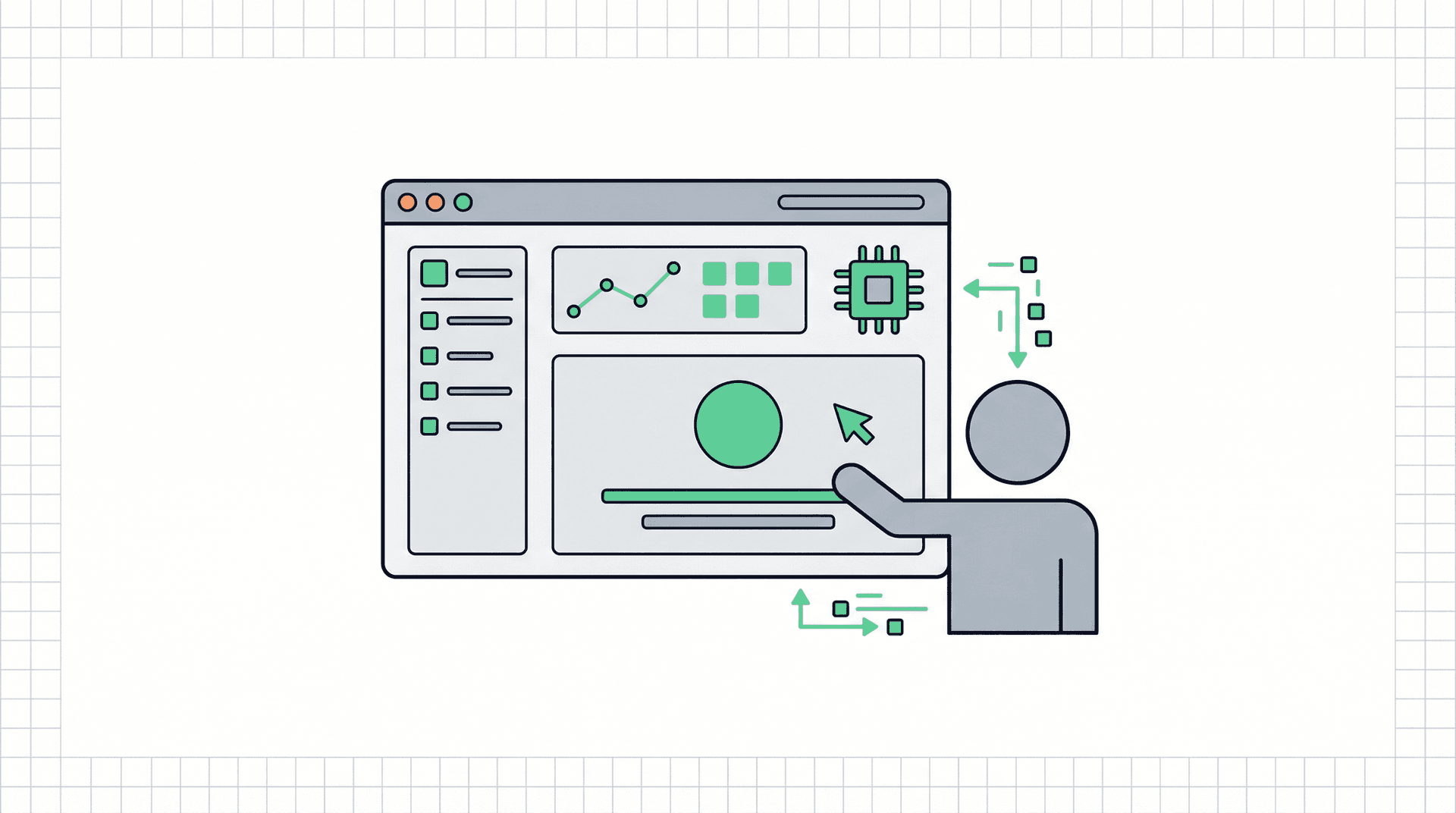
An AI-powered customer portal is a secure, private online platform that uses artificial intelligence to give customers personalized access to information, account management tools, and support resources around the clock. The difference from a traditional portal is what happens under the hood. Instead of serving the same static pages to everyone, the system analyzes user behavior, preferences, and context, then surfaces relevant recommendations and proactive support. Done right, it feels dynamic and intuitive: interactive dashboards, real self-service, and an interface that adapts to each user's journey.
Why AI-Powered Portals are Essential in 2026
Customers increasingly expect to manage their accounts online, on their own time, without waiting in a queue. AI in the portal is what makes that practical. Here is why:
- Faster resolutions. Quick resolution is one of the things customers value most in good service. AI-driven chat and intelligent knowledge bases answer instantly, no queue.
- Real personalization. AI analyzes usage patterns to deliver tailored content, account information, and product-specific guides, so each customer sees what matters to them.
- Lower support costs. Well-implemented portals deflect routine inquiries away from live agents, and that deflection compounds into substantial annual savings.
- Happier customers. Speed and convenience show up where it counts: customers who can solve a problem in seconds rate the experience higher.
- Customers who prefer it this way. Many people would rather self-serve than talk to a representative. AI lets them solve problems on their own schedule.
- More productive agents. When AI handles the routine questions, your human team works the complex, high-value issues instead of resetting passwords all day. Morale goes up with the leverage.
Key Features of an Effective AI-Powered Customer Portal
A portal that earns daily use is built from a handful of core components:
- AI agent integration. Chatbots handle the simple stuff instantly, and most customers prefer them for straightforward queries.
- Intelligent knowledge base. A searchable library of articles, guides, and FAQs, with AI ranking results by context instead of keyword matching alone.
- Personalized dashboards. Account status, order history, and product-specific guides, arranged around what each individual user actually does.
- Order and payment management. Customers view past orders, track shipments, manage payment methods, and pay securely without filing a ticket.
- Secure document sharing. Contracts, reports, and other sensitive files live in one organized hub instead of scattered email threads.
- Community forums. Peer-to-peer support that AI moderates and organizes. Customers helping customers can generate a large share of your support content.
- Proactive engagement. Automated alerts and recommendations keep customers on track and make a scaled product feel like a 1:1 relationship.
- Support ticketing and request types. For the issues that genuinely need a human, structured ticket submission, with AI routing requests to the right department for faster resolution.
Building Your AI-Powered Customer Portal
Building one of these is a strategy problem before it is a code problem. Integration, customization, and scalability decisions made early determine whether the portal becomes the front door of your business or another login nobody uses.
1. Define Your Needs and Objectives
Before any development, get specific: what problems is the portal solving, who are the target users, and which existing systems does it have to talk to? Decide up front how much customization and branding you need so the portal reads as your business, not a generic template.
2. Choose the Right Technology Stack
The platform decision is the one you live with longest. Custom code is the traditional route, but no-code platforms and AI-powered interface builders have changed the economics. AI-native interface builders can automate much of the heavy lifting, generating customized portals from your inputs in a fraction of the time. Whatever direction you go, weigh these factors:
- Integration capabilities. The portal has to connect cleanly with your existing CRM, ERP, and billing software. One unified data source is what makes the automation powerful.
- Customization and flexibility. Full branding and adaptation to your actual workflows. Rigid off-the-shelf tools force your business to bend around them.
- Scalability. Pick something that handles more users and more features as you grow, not something you rebuild in two years.
- Security. Access controls, encryption, and compliance with regulations like GDPR are non-negotiable when you hold sensitive customer data.
- Mobile responsiveness. A large share of users will open the portal on a phone. If it breaks on mobile, it may as well not exist.
3. Integrate Data Sources
The AI is only as smart as the data you feed it. Wire in customer behavior data, support interactions, and sales metrics so the system has a complete picture and can deliver personalized, real-time insights instead of generic guesses.
4. Design for User Experience (UX)
The portal should feel like a natural extension of your brand: your logo, your colors, your typography. Then make it effortless to use. Clear navigation, logical content categorization, and a search function that actually finds things are what separate portals people adopt from portals people abandon.
5. Implement AI Features
Now layer in the intelligence: chat for instant support, recommendations driven by user activity, proactive alerts. This is the step that turns a basic account page into a customer engagement platform.
6. Test, Iterate, and Optimize
Client portals are never "finished." Keep testing, keep gathering user feedback, keep optimizing. Review performance data and customer feedback on a regular cadence to find weak spots and decide what to build next.
The Grid Theory Angle: Building Bespoke AI-Powered Portals
Off-the-shelf tools and no-code platforms get you a quick start. They tend to fall short the moment you need something truly unique: deep integrations, custom AI behavior, a system that scales with the business. That is where Grid Theory's custom-build approach earns its keep. We build portals as strategic assets aligned to your business objectives, not as another tool in the stack.
How we work: We start by understanding your specific business goals and customer needs, defining the exact functionality, integrations, and AI capabilities required to solve your problems and deliver measurable value. We bring the right technologies and the right people to architect portals that are robust, secure, and fast, so the result is sustainable rather than over-engineered. We work in rapid development cycles with tight feedback loops, so your portal evolves through real-world testing and user insight while the AI functionality keeps getting tuned as we learn what your customers actually do. And we ship fully customized, seamlessly integrated portals designed to scale with your business and absorb new technology as it arrives, keeping you ahead on customer engagement instead of catching up.
Partner with Grid Theory and you get a bespoke AI-powered customer portal that fits your existing ecosystem, personalizes at a level templates cannot, and moves the numbers on customer satisfaction and operational efficiency. We do not just build portals. We build intelligent customer engagement platforms that give you a competitive edge.
Ready to Get Started?
Building the right systems doesn't have to be overwhelming. Grid Theory helps businesses design and implement solutions that actually work, no bloated platforms, no guesswork.
Book a discovery call and let's talk about what this could look like for your business.