Introduction
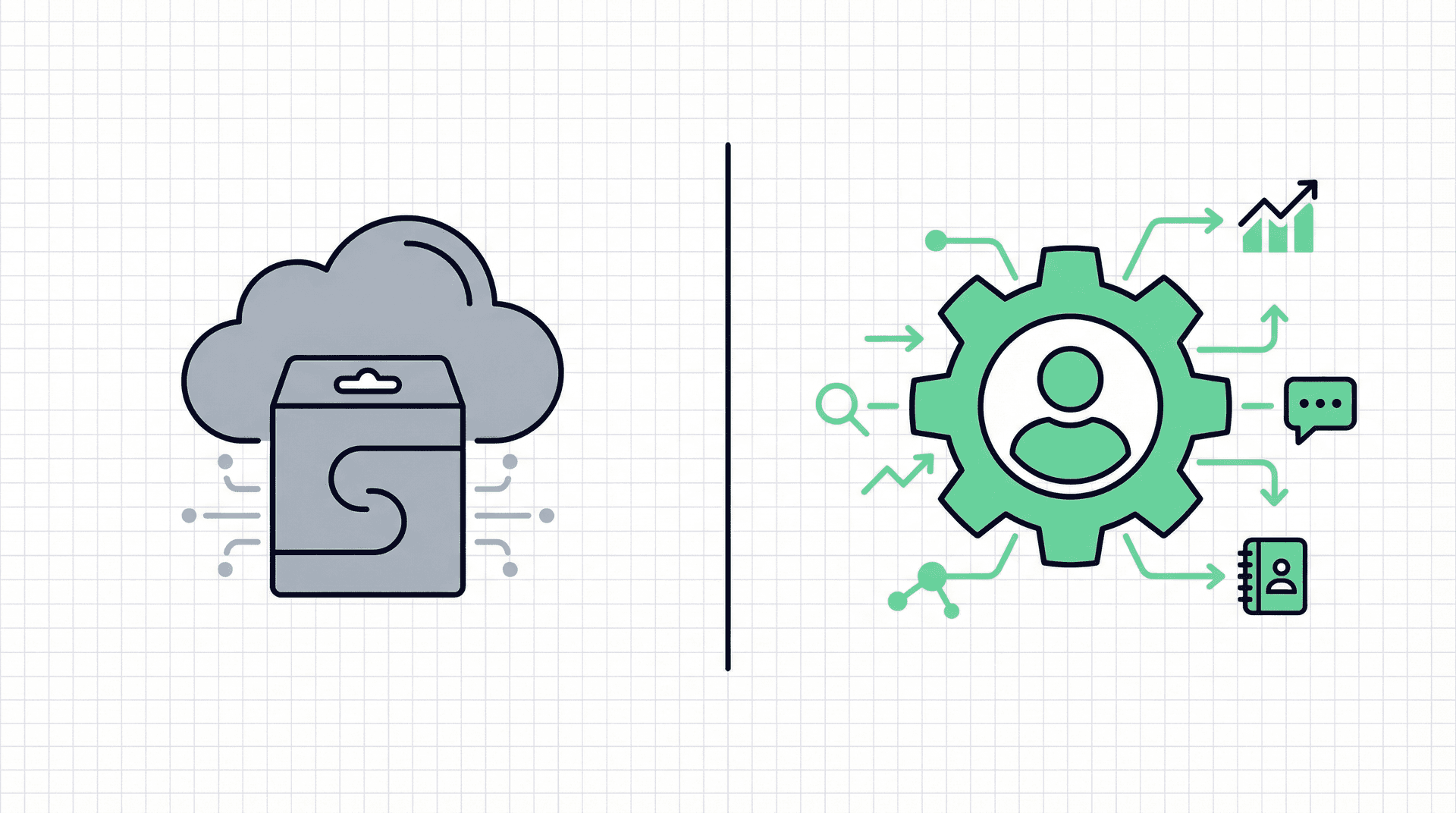
Customer Relationship Management (CRM) systems are no longer a luxury but a necessity for businesses aiming for sustainable growth. While off-the-shelf solutions like Salesforce have long dominated the market, a growing number of businesses, particularly those experiencing significant expansion, are questioning whether these pre-packaged platforms truly meet their unique needs. The problem lies in the inherent rigidity and often high costs associated with adapting a generic CRM to a highly specific business model. This article looks at why growing businesses are increasingly opting to build their own custom CRM solutions, offering flexibility, cost-effectiveness, and a closer fit for their operational intricacies.
Main Body: The Evolving CRM Landscape
The Allure and Limitations of Salesforce
Salesforce has undeniably set the benchmark for cloud-based CRM, offering a vast array of features, extensive integrations, and a robust ecosystem. For many small businesses starting out, Salesforce provides a quick and relatively easy entry point into structured customer management. Its comprehensive suite of tools, from sales automation to customer service, can seem like an all-encompassing solution.
However, as businesses grow, the limitations of a one-size-fits-all approach become increasingly apparent. Salesforce's extensive feature set often comes with a steep learning curve and a complex pricing structure that can quickly escalate. What initially appears as a cost-effective solution can become a significant drain on resources as businesses require more advanced features, additional users, or specialized integrations. Moreover, the platform's inherent design, while powerful, can be restrictive, forcing businesses to adapt their unique workflows to the CRM's capabilities rather than the other way around.
The Case for Custom CRM Development
A custom CRM, by its very definition, is built from the ground up to address the specific needs and processes of a business. This bespoke approach offers a multitude of advantages that off-the-shelf solutions struggle to match.
Tailored Workflows and Enhanced Efficiency
One of the most significant benefits of a custom CRM is its ability to perfectly mirror a business's unique operational workflows. Unlike generic systems that may require workarounds or manual steps to accommodate specific processes, a custom CRM automates and streamlines these tasks seamlessly. This precision leads to enhanced efficiency, reduced manual errors, and a more productive sales and customer service team. For growing businesses, where every minute and every customer interaction counts, this tailored approach makes a real difference.
Cost-Effectiveness in the Long Run
While the initial investment in custom CRM development might seem higher than a subscription to Salesforce, the long-term cost implications often favor a custom solution. Salesforce's tiered pricing, add-on features, and per-user licensing can lead to spiraling costs as a business scales. Custom CRMs, on the other hand, eliminate recurring subscription fees and allow businesses to pay only for the features they genuinely need. Furthermore, the ability to integrate seamlessly with existing systems can prevent the need for costly third-party integrations or data migration challenges down the line.
Scalability and Flexibility
Growing businesses require systems that can evolve with them. Custom CRMs offer strong scalability and flexibility, allowing businesses to add new features, integrate with emerging technologies, and adapt to changing market demands without being constrained by vendor limitations. This agility ensures that the CRM remains a strategic asset, continuously supporting growth rather than becoming an impediment.
Data Ownership and Security
With a custom CRM, businesses retain full ownership and control over their data. This is a critical consideration in an era of increasing data privacy concerns and regulatory compliance. Custom solutions can be designed with specific security protocols and compliance requirements in mind, offering a level of control and peace of mind that may not be fully achievable with third-party platforms.
The Grid Theory Angle: Building Systems That Work for You
At Grid Theory, we understand that a CRM is not just a tool; it's the central nervous system of your customer operations. Our approach to building custom systems is rooted in the belief that technology should serve your business, not the other way around. We don't just build software; we engineer solutions that are precisely aligned with your strategic objectives and operational realities.
Our approach keeps every custom CRM build anchored to a few core commitments. We design CRMs that are inherently scalable, anticipating your future needs and building in the flexibility to accommodate expansion without disruption, so your CRM grows with you rather than holding you back. We build with robust architectures and rigorous testing, so you can rely on your CRM to perform consistently with strong uptime and data integrity. We use current technologies and best practices to create CRM features that give you an edge, from AI-powered analytics to seamless mobile integration. And because business environments are dynamic, our agile development process allows for continuous iteration, keeping your CRM responsive to changing market conditions and evolving customer expectations.
By partnering with Grid Theory, businesses move beyond the limitations of off-the-shelf solutions. We help you define your ideal CRM, crafting a system that not only meets your current needs but also positions you for sustained success in the years to come. Our expertise in building custom systems means you get a CRM that is not just a better fit, but a strategic advantage.
Ready to Get Started?
Building the right systems doesn't have to be overwhelming. Grid Theory helps businesses design and implement solutions that actually work, no bloated platforms, no guesswork.
Book a discovery call and let's talk about what this could look like for your business.