Introduction
Service businesses now need solid digital infrastructure to keep up. Fragmented tools and manual processes for scheduling, client management, and payment processing create friction, and businesses that stick with them tend to lose ground to competitors who run on better technology. The problem is clear: without a cohesive digital strategy, service businesses struggle with scalability, operational inefficiencies, and an inability to meet modern customer expectations. This article explains how a full-stack web application offers a comprehensive, integrated solution that helps service businesses run and grow.
Full-Stack Web Application Development
What is a Full-Stack Web Application?
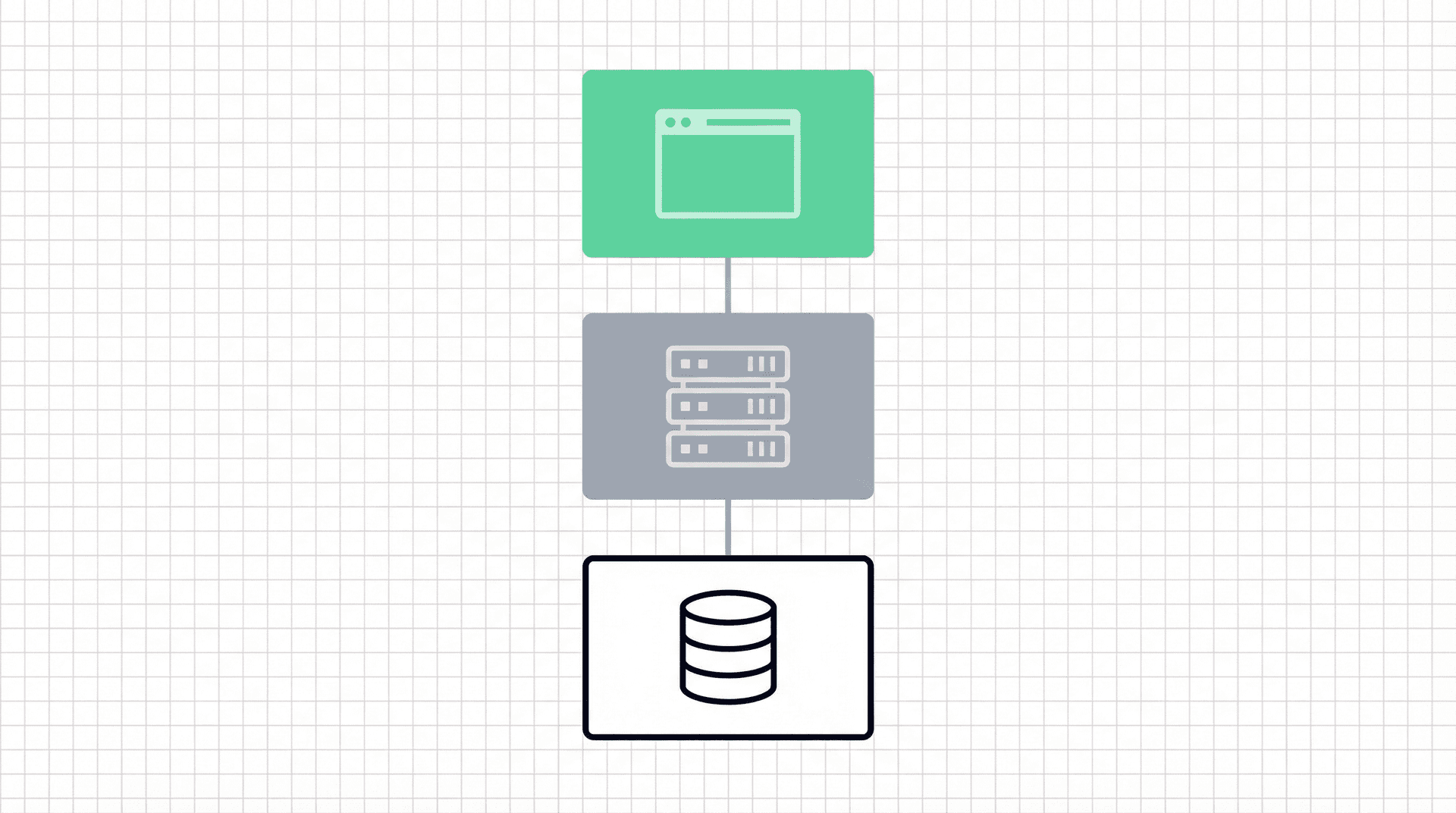
A full-stack web application encompasses both the front-end (client-side) and back-end (server-side) components, providing a complete and integrated digital solution. The front-end is what users interact with directly, the visual interface, forms, and interactive elements. It's built using technologies like HTML, CSS, and JavaScript frameworks such as React, Angular, or Vue.js. The back-end, on the other hand, handles the server logic, database interactions, and application functionality that users don't directly see. This includes managing data, processing requests, and integrating with external services. Common back-end technologies include Node.js, Python (with frameworks like Django or Flask), Ruby on Rails, and PHP (with Laravel).
For service businesses, the benefits of a full-stack approach are real:
- Unified experience: A single, integrated platform streamlines all business functions, from appointment booking and client communication to invoicing and analytics.
- Scalability: Designed to grow with your business, full-stack applications can easily accommodate increasing user loads and new features without requiring a complete overhaul.
- Customization: Unlike off-the-shelf solutions, a custom full-stack application can be precisely tailored to your unique operational workflows and specific business needs.
- Efficiency: Automation of repetitive tasks, such as scheduling reminders or payment processing, significantly reduces manual effort and frees up valuable time.
- Improved customer experience: Offering easy online booking, personalized client portals, and seamless communication channels leads to higher customer satisfaction and loyalty.
Key Components of a Full-Stack Web Application for Service Businesses
Understanding the core components is crucial for appreciating what a full-stack solution can do:
Front-end (Client-side)
This is the user-facing part of your application. For a service business, this might include:
- User Interface (UI) and User Experience (UX) Design: Intuitive booking forms, client dashboards for managing appointments and viewing service history, and clear presentation of service offerings. A well-designed UI/UX is paramount for user adoption and satisfaction.
- Technologies: HTML provides the structure, CSS handles the styling, and JavaScript (often with frameworks like React, Angular, or Vue.js) adds interactivity and dynamic content.
Back-end (Server-side)
The back-end is the engine that powers your application, handling critical business logic:
- Server Logic: This includes the intelligence behind appointment scheduling, real-time availability checks, secure payment processing, and comprehensive data management.
- APIs (Application Programming Interfaces): These act as intermediaries, allowing the front-end and back-end to communicate seamlessly and securely. They also enable integration with third-party services.
- Technologies: Popular choices include Node.js (known for its speed and scalability), Python (with frameworks like Django or Flask, favored for rapid development and data handling), Ruby on Rails (for convention-over-configuration), and PHP (with Laravel, a robust framework).
Database
The database is where all your critical business information resides, ensuring data integrity and accessibility:
- Data Storage: This includes client information, detailed service descriptions, appointment schedules, staff availability, and secure payment records.
- Technologies: SQL databases like PostgreSQL and MySQL are excellent for structured data and complex queries, ensuring transactional integrity. NoSQL databases such as MongoDB offer flexibility for unstructured or rapidly changing data, often preferred for their scalability in certain use cases.
Step-by-Step Guide to Building Your Web Application
Building a full-stack web application is a structured process that requires careful planning and execution:
Step 1: Define Your Purpose and Scope
Begin by clearly identifying the core problems your application will solve. What are the essential functionalities? Who is your target audience, and what are their pain points? Define your Minimum Viable Product (MVP), the smallest set of features that delivers value and can be launched quickly to gather feedback.
Step 2: Research and Planning
This phase involves critical decisions. Select a technology stack that aligns with your business goals, budget, and future scalability needs. Create detailed wireframes and prototypes to visualize the user flow and interface. Develop a comprehensive project roadmap outlining milestones and deliverables.
Step 3: Design and Development
This is where the application comes to life. Front-end developers build the user interface, focusing on intuitive design and responsive layouts. Back-end developers construct the server logic, APIs, and database schema. Crucially, integrate any necessary third-party services, such as payment gateways (e.g., Stripe, PayPal) or communication tools (e.g., Twilio).
Step 4: Testing and Quality Assurance
Thorough testing is non-negotiable. This includes unit testing (individual components), integration testing (how components work together), and user acceptance testing (UAT), where actual users test the application to ensure it meets their needs. Identify and fix bugs, and optimize performance for speed and reliability.
Step 5: Deployment and Maintenance
Once tested, deploy your application to a suitable hosting solution (e.g., AWS, Google Cloud, Azure). Deployment is not the end; ongoing maintenance is vital. This includes regular updates, applying security patches, monitoring performance, and continuously adding new features based on user feedback and business evolution.
The Grid Theory Angle: Your Partner in Digital Transformation
Building a sophisticated full-stack web application is a significant undertaking. It demands specialized technical expertise, meticulous project management, and a deep understanding of both front-end and back-end development. Many service businesses find themselves overwhelmed by the complexity, struggling with limited in-house resources or the challenge of finding reliable, skilled development partners. This is precisely where Grid Theory distinguishes itself.
Grid Theory is not just a development agency; we are strategic partners in your digital transformation. We build custom, robust, and scalable full-stack web applications that are carefully designed to address the unique challenges and opportunities within the service industry. Our approach keeps every project grounded in your business and executed with precision and purpose:
- Clear goals: We begin by deeply understanding your business objectives, ensuring the web application is perfectly aligned with your strategic vision and delivers measurable results.
- Smart resourcing: We optimize the allocation of your resources, time, budget, and existing technological assets, to maximize efficiency and return on investment.
- Deep integration: Our expertise lies in seamlessly integrating all aspects of your business operations, from CRM and scheduling to payment systems, creating a unified and efficient ecosystem.
- Iterative development: We employ an agile and iterative development process, ensuring flexibility, transparency, and continuous delivery of high-quality, future-proof solutions.
Grid Theory's strength lies in our comprehensive understanding of modern tech stacks, our unwavering commitment to client success, and our ability to translate complex business needs into intuitive, high-performing digital solutions. We don't just build applications; we build long-term partnerships, providing ongoing support and strategic guidance to ensure your web application remains a competitive asset.
Ready to Get Started?
Building the right systems doesn't have to be overwhelming. Grid Theory helps businesses design and implement solutions that actually work, no bloated platforms, no guesswork.
Book a discovery call and let's talk about what this could look like for your business.