Introduction
Businesses want AI that is accurate, current, and grounded in their own data, not just text that sounds plausible. One of the most useful advances toward that goal is Retrieval-Augmented Generation (RAG). As large language models (LLMs) become common, the hard part is no longer generating text, it is generating accurate, contextually relevant, and up-to-date text. That is where RAG systems earn their place. They address the built-in limitations of LLMs, such as hallucination and outdated information, by grounding responses in authoritative, real-time data. This article explains what RAG systems are, how they work, and why a well-built one matters for your business.
Main Body: Understanding Retrieval-Augmented Generation
What is RAG?
Retrieval-Augmented Generation (RAG) is an AI framework that extends large language models (LLMs) by connecting them to an information retrieval system. Traditional LLMs generate responses based solely on the data they were trained on, which can lead to several issues: they might generate plausible but incorrect information (hallucinations), provide outdated information, or lack specific domain knowledge. RAG addresses these limitations by letting the LLM access and incorporate information from an external, authoritative knowledge base before generating a response.
How RAG Works
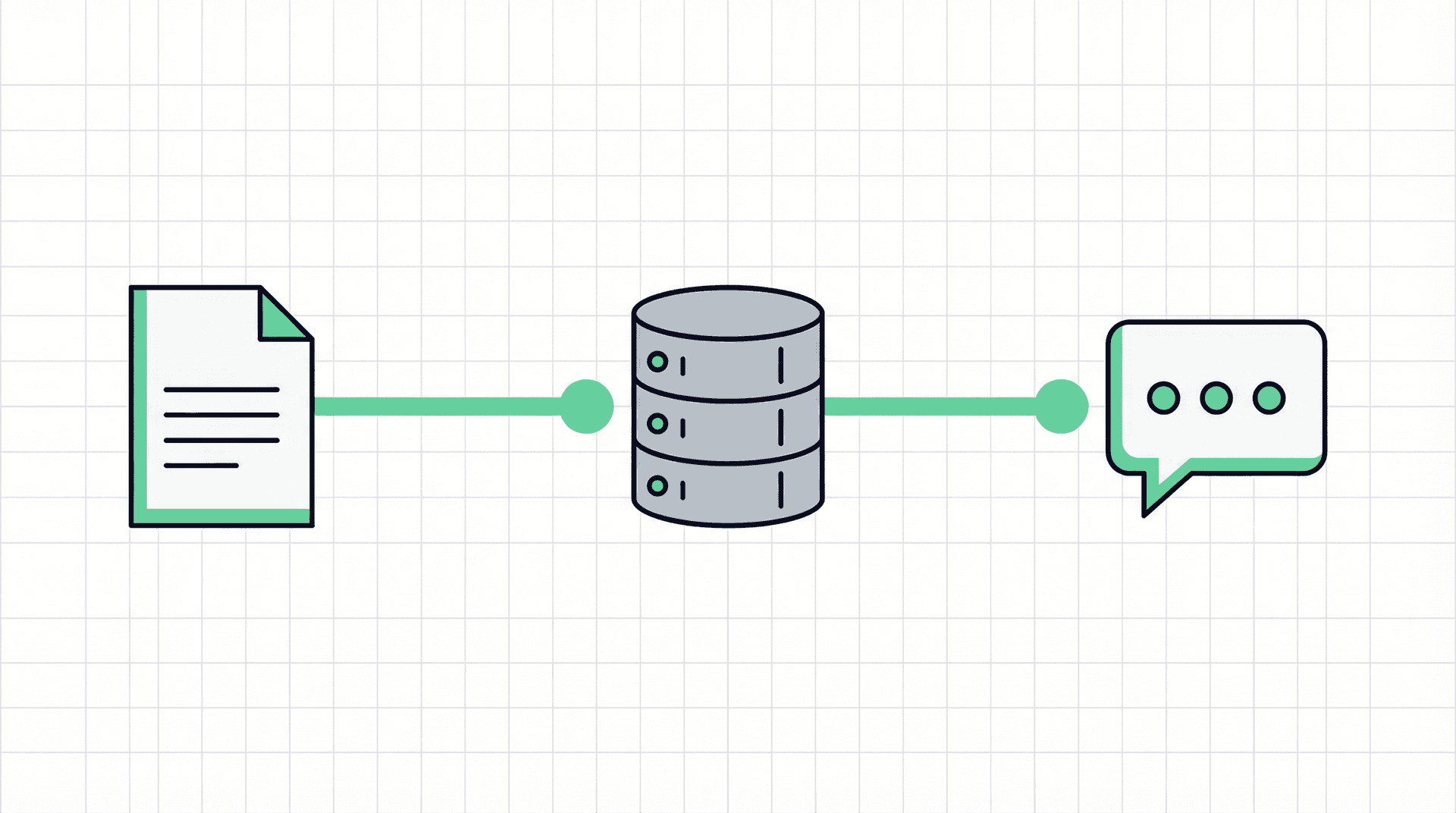
The RAG process typically involves two main stages:
- Retrieval: When a user poses a query, the RAG system first retrieves relevant documents or passages from a designated knowledge base. This knowledge base can be a collection of internal company documents, databases, or curated external sources. Search and indexing techniques quickly identify the most pertinent information.
- Generation: The retrieved information is then provided to the LLM as additional context alongside the original query. The LLM uses this augmented input to generate a more accurate, informed, and contextually relevant response. This process keeps the LLM's output grounded in verifiable facts and up-to-date information, reducing the risk of hallucinations and improving the overall quality of the generated content.
Key Benefits of RAG for Businesses
Integrating a RAG system offers several advantages for businesses across sectors:
- Enhanced Accuracy and Reliability: By drawing on authoritative internal data, RAG systems reduce the likelihood of LLMs generating incorrect or misleading information. This matters for applications requiring high factual accuracy, such as customer support, legal research, or medical inquiries.
- Access to Up-to-Date Information: Unlike traditional LLMs whose knowledge is limited to their last training cut-off date, RAG systems can access and incorporate real-time data. This keeps responses current, which is vital in fast-changing industries or for businesses dealing with dynamic information.
- Domain-Specific Expertise: Businesses often hold large amounts of proprietary data and domain-specific knowledge. RAG lets LLMs tap into this internal expertise, so they can provide specialized, relevant answers that a general-purpose LLM could not produce.
- Reduced Hallucinations: One of the most significant challenges with LLMs is their tendency to hallucinate. RAG mitigates this by giving the LLM concrete evidence from the knowledge base, forcing it to ground responses in facts rather than speculation.
- Cost-Effectiveness: Fine-tuning an LLM for specific tasks can be expensive and resource-intensive. RAG offers a more affordable alternative. It lets businesses use powerful pre-trained LLMs and augment them with their data without extensive retraining.
- Improved User Experience: For applications like chatbots and virtual assistants, RAG leads to more helpful, accurate, and trustworthy interactions, building greater confidence in AI-powered solutions.
The Grid Theory Angle: Building Superior RAG Systems with Custom Solutions
While the benefits of RAG systems are clear, getting an implementation right takes a careful understanding of data architecture, retrieval mechanisms, and integration with existing business processes. This is where Grid Theory excels. Off-the-shelf solutions rarely meet the unique demands of complex business environments. Our approach focuses on building custom systems tailored to your specific needs, so your RAG implementation is not just functional but genuinely useful.
Our methodology rests on a few core principles that guide how we develop robust, scalable AI solutions. We ground every RAG system in your most authoritative and relevant data sources, with careful data curation, indexing, and retrieval pipelines so the LLM always works from accurate information. We tune our retrieval to fetch information that is highly relevant to the user's query, minimizing noise and maximizing precision, and we use semantic search to understand the intent behind a query, not just its keywords. We integrate the system with your existing enterprise architecture, including CRM, ERP, and knowledge management platforms, so data flows cleanly and the AI experience stays consistent across your organization. And because business and data landscapes keep shifting, we build for ongoing change: continuous learning, easy knowledge-base updates, and flexible scaling, so the system evolves with your business.
By focusing on these principles, Grid Theory develops RAG systems that go beyond basic information retrieval. We engineer solutions that provide intelligent, context-aware, and actionable insights, turning your proprietary data into a strategic asset. Building bespoke AI architectures means your RAG system is optimized for performance, security, and your unique operational workflows.
Ready to Get Started?
Building the right systems doesn't have to be overwhelming. Grid Theory helps businesses design and implement solutions that actually work, no bloated platforms, no guesswork.
Book a discovery call and let's talk about what this could look like for your business.